Happy Dance! I Got a New Award!

We writers are a needy bunch, aren’t we? Who but writers would feel compelled to invent blogging awards and then pass them around to their online friends?

But hey, recognition — in any form — is a heady thing, and I for one certainly won’t turn it down!

Liebster Blog Award

Which brings me to my latest accomplishment. My friend Izzie over at The Whatever Factor recently passed on the Liebster Blog Award to me — Thanks, Iz, I ‘preciate it!

Now most of the time it pains me to admit ignorance, but here goes: When I saw the Liebster Blog Award, I had no idea what it was.

It sounded like “lobster” to me, and at first I thought it had something to do with food. Or Lent.

So I did what any good writer would do — opened up another window to research the term.

“Liebster” is a German word meaning “dearest” or “beloved.” Its connotation also extends to “favorite.” (Since I don’t have a single drop of German blood, no wonder I wasn’t familiar with this word!)

But somebody considers me a favorite. Cool! I’m almost speechless!

As with most other blogging awards, the Liebster Blog Award carries some heavy responsibilities, none of which I take lightly. Without further ado, here’s what is supposed to take place next:

  1. Thank the blogger who gave you the award and link back to them.
  2. Copy and paste the blog award on your blog (get it from Google Images, if you’d like).
  3. Pass the Liebster Blog Award on to five other bloggers you admire.
  4. Let your recipients know of the award by leaving a comment on their blogs.
  5. Bask in the love of the blogosphere.

Now, the Liebster Blog Award is supposed to be presented to relatively “small” blogs — those with fewer than 200 followers. But I have NO IDEA how many people are following these blogs, nor do I have time to try to figure it out! If your name is listed here and you have w-a-a-a-y more followers than 200, don’t shoot the messenger, okay? Just re-read Rule #5 above and be happy!

And now — Ta Da! — my choices for the Liebster Blog Award:

So off you go — congratulations and don’t forget to spread the love!
How do you tame the Social Media Monster?

Are you, like me, sometimes overwhelmed by the proliferation of social media and the expectation that we ALL participate — in everything?

The arguments are persuasive:

  • Writers need a platform, a following, to show agents they’re able to promote their manuscript
  • Businesses need to connect with potential buyers and generate “buzz” about their services or products
  • Nobody in the entire world can possibly connect with as many people in real life as is possible online

But all that connecting can be exhausting, especially for writers (who tend to be introverts anyway and often find it easier to hole up and just write).

And perhaps it’s lots worse on those writers who, like me, can’t write full time right now because they must work at a paying job. Or those with small children. Or aging parents. Or…whatever.

We can all find excuses for NOT connecting online. Yet the reality is, there are only 24 hours in a day and, if you listen to the “experts,” we need to be sleeping 8 of them. That leaves 16 hours. For those who work, subtract 8 more (or 10 if you have a long commute), bringing your total “free” time to 6 hours.

Six hours to do basic personal maintenance (like bathing), run errands (banking, grocery shopping), taxi the kids to and from lessons and sleepovers, kiss the spouse, walk the dog, cook meals, and clean the house.

That doesn’t include time for yourself — to read, soak in a spa, exercise, paint, take up piano, or write.

What’s the answer?

If you look at the history of social media, you’ll find that blogging started in 1997. Facebook debuted in February, 2004, Twitter in March, 2006, and Google Plus in June, 2011. More than 845 million people are on Facebook and at Twitter’s five-year mark, some 350 billion “tweets” are delivered each day. In addition, countless webinars are now available, on everything from how to make your small business successful to how to plot that story lurking in your head.

No wonder we feel deluged!

Some people address this problem by periodically scheduling a vacation from online activities. They fold up the laptop, turn off the i-pad and phone, and unplug from the busyness.

That’s a good idea. We all need to recharge occasionally.

Other people set a timer. When their hour (or however much time they’ve allotted) is up, that’s it. No looking back. No cheating.

Do our online friends miss us when we don’t show up? I’d like to think so because I miss them when they’re absent for a time. But, if we announce that we’re taking a sabbatical, at least we’re letting everyone know we’ll be out of touch.

My suggestion (and it’s more a “Memo” to me rather than something you need!): Remember why you started down the social media path in the first place. Enjoy your time connecting. But don’t feel you have to be connected 24/7!

How have you tamed the social media monster??

Rejected, Again

A couple of months ago I entered a short story I’d written into The Missouri Review’s contest, hopeful I’d win (or at least place).

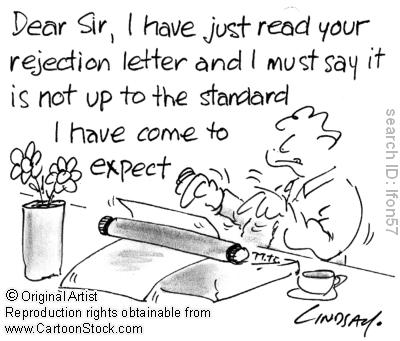
The rejection letter came this week.

They had a lot of entrants, they said, and the quality was “extraordinarily high.” They wished me well on my writing journey.

Nice.

It would have been nicer to win — $5,000 plus publication would have made my day!

But at least I tried. I put my work out there, and someone (or perhaps many someones!) read it.

And I realized something about myself — before, early in my foray into creative writing, rejection hit me hard. I brooded about it for days, reading and re-reading the letter or postcard, wondering how I could have secured a better outcome. I saved my rejection letters in a file, too, mentally criticizing how some secretary had misfolded the letter. Or how somebody had worded the form response. Or how somebody hadn’t even taken the time to actually sign the letter.

No more.

Sure, rejection stinks. It stings, too.

But only for a moment.

These days I’m handling it better. More realistically. More maturely.

I’m not fixating on the rejection. Or the feelings at being rejected.

Rejection is what it is.

Somebody’s opinion of something I wrote. Period.

Maybe it wasn’t the best “something” I could ever create. Maybe, when lined up next to something somebody else created, it didn’t measure up.

Okay.

I still shared something of myself with a portion of the world. Not everybody who reads what I write is going to like it (shoot, sometimes I re-read something I wrote and I don’t like it!).

Writing isn’t math. You can’t just add two plus two and get four. As a creative outlet, writing is more like art or music.

Some people will “get” it and like it; others won’t.

Does that make our writing any less worthwhile?

Of course not.

If you haven’t been rejected lately, you haven’t been submitting (unless you’ve got a perfect batting record!). And if you haven’t been submitting, how can you expect to get published??

A Rose is a Rose…or Maybe Not

Red rose (image via http://www.freestockphotos.biz)

I’ve got a question — Does it matter to you what an author’s name is?

I mean, does Mary carry more clout than Ashley? Does Cheyenne sound younger than Dianne? And does it matter?

The reason I ask is that my first name appears on the nation’s Top 100 Baby Name Lists from the 1940s through the 1970s.

That’s a l-o-n-g time for a name to be popular.

And while I’ve written countless news stories under my name, I sometimes wonder if “Debbie” sounds writerly enough.

Perhaps because there were so many of us Debbies in my high school class, I’ve come to think of my name as a montage of the girls I once knew. Some were cheerleaders; some were “popular”; some were musicians; some were funny.

None were writers — except me, of course. And I was more of a closet writer, insecure about my talent and afraid to be considered “weird.”

High school is like that. We try so hard to fit in, yet when the annual yearbook-signing ritual arrived, we Debbies donned new personas in an attempt to stand out. We became Debby, or Debi, or Debee, or Debra.

Some even used their middle names, though Ann in one form or another is just about as popular as Debbie is.

Maybe it’s just a regional thing. After all, I hardly knew any Debbies in college, and I haven’t come across a new Debbie in ages.

We all know baby names are cyclical. Old-time names like Ava and Ella and Abigail are once again popular with new parents, while names like Lisa and Wendy and Laurie can’t be found anywhere.

Does a name date an author in an agent’s mind? Should it?

All the writing books and magazines I’ve read stress the importance of getting characters’ names right. You don’t want to put an Ariel, for instance, in the 1950s, or a Chrystal in the 1880s. It might have happened, but if so, it was a rarity, and you don’t want to flag your ignorance in front of agents.

But what about the author’s name? Does a Chloe sound too young to pen a serious novel? Does Jane sound too old to be alive for the long haul?

Maybe I’m stressing for nothing. Maybe nobody cares but me.

And maybe I could end the whole shebang by choosing a pen-name for myself, much the way I’d do for my characters.

What do you think? Do you judge a writer by his name? Do you even care?

No NaNoWriMo for Me

So who’s planning on participating in NaNoWriMo this year?

For those who aren’t familiar with the term, NaNoWriMo stands for National Novel Writing Month. Begun on the West Coast in 1999 with all of 21 participants, it’s grown exponentially ever since; last year, more than 200,000 people signed up for the challenge.

Basically, participants commit to writing a new 50,000-word novel in the space of 30 days, beginning at midnight on Nov. 1 and ending at 11:59:59 on Nov. 30.

To complete the task on time, they must write 1,667 words each day.

Do NOT expect me to participate in such tomfoolery!

Writing is serious business.

Sure, I’d love to write an entire novel in 30 days. I’d love to be declared a “winner” just by completing the required goal. And I’d love to have the kind of time in which I could do nothing for a full month but write.

But I’m telling ya, it ain’t gonna happen.

NaNoWriMo seems to encourage quantity over quality, a philosophy I can’t buy into. Their slogan is “No Plot? No Problem!”, also the title of the book penned by the instigator of this challenge.

Now I’m one of those painstaking writers. Even when I was working in the daily newspaper biz, I wrote and re-wrote my stories, changing a word here, moving a paragraph there, editing, always editing, right up to deadline. My editors used to love my clean copy (the good sisters who taught me English would’ve been proud!).

No way can I rationalize blabbering just to meet a word goal.

And another thing. Writing is a solitary endeavor. My inner editor is persistent in demanding I keep butt in chair and hands on the keyboard.

I don’t need (or want) weekly pep-talks in my e-mail box, advice forums, and fancy kickoff parties to “help” me write. That kind of procrastination only gets in the way of the task at hand.

Nor do I think it’s a good idea for NaNoWriMo to encourage everybody and his brother to simply string words together and call themselves a winner. There’s enough junk on the market right now; we don’t need more. And agents are probably shuddering over the idea that any of this hastily written drivel will actually be *gasp* submitted.

Finally, I’ve always believed you shouldn’t set unrealistic goals for yourself. That just sets you up for failure, which isn’t good for your self-esteem.

Some days I’m quite productive; other days, not so much. But I’d rather write less that’s right than more that’s filler.

As Gandhi said, “It is the quality of our work which will please God and not the quantity.”

Any thoughts you’d like to share?

All Dressed up and Nowhere to go

I kind of miss getting all slicked up and going into an office to work.

No, I’m not retired — I work for myself. Out of my home.

And while there are a gazillion-and-one positives, the slicking-up thing is one I miss.

Sometimes.

In my early career as a newspaper journalist, casual pants and a blouse (or sweater, depending on the weather) were my “go-to” uniform. My makeup was subdued; my hair wash-and-wear. That’s it. I had to be ready for whatever the day would bring, whether it was covering a fire or a meeting or interviewing some official.

Male reporters wore slacks, a dress shirt, and tie (no jacket, unless you were an editor). Some donned jeans; the sports department got away with shorts (or sweats) and T-shirts with team logos.

The female reporters dressed pretty much as I did. Any time one of us appeared for work in a skirt or dress, the others in the newsroom never missed the opportunity to rib us and ask where we were heading that day to require getting “all gussied up.”

After I changed careers and became a pharmaceutical sales rep, I had to purchase a completely new wardrobe. Suddenly I needed suits with matching skirts or slacks, hosiery, heels, a briefcase. My makeup had to be perfect; my hair properly styled; my fingernails manicured with polish. Every day.

When you’re sitting face to face with doctors or pharmacists, promoting your product in big-city convention halls, or working with your manager, you want to look your best. Your company expects it; everybody else looks like a cookie-cutter version of you.

But now I’m a self-employed Web designer. I work from a home office; I wear what I choose.

Outside-the-office meetings with clients or potential clients find me dressing up a bit, but most summer days I’m in shorts, T-shirt, and sneakers; my jeans come out when the weather cools. Who really cares what someone is wearing when they’re working on a computer all day? But I haven’t shaken the habit of putting on makeup, keeping my hair styled and my fingernails polished!

The point is, Now it’s my choice.

Still, every so often, when I’m walking my dog early in the morning and I see cars pass with slicked-up people going to work, I find myself longing to be slicked up, too.

Well, maybe just a teeny bit.

Do I miss it enough to give up self-employment?

Uh-uh. No way.

Letters Go the Way of Steam Locomotives

I read this morning that the average American home last year received a personal letter about every seven weeks.

That compares to 1987, when personal letters (not counting greeting cards or invitations) arrived once every two weeks.

As a writer, I think that’s sad.

The annual survey done by the postal service points to the proliferation of electronic communication — Facebook, e-mails, Twitter, etc. — as the reason for the drop in letter-writing. Catalogs, requests-for-monetary-contributions, and advertisements aren’t figured in with this statistic.

Admittedly, I’m as guilty as the next person for sending my share of e-mail. I write My Favorite Domer almost every day, whether it’s just a quick reminder or something funny I forgot to tell him on the phone or an “I love you” or a “Good Luck on your test.”

But it’s different with my childhood best friend. She moved away when we were in junior high, and we’ve corresponded by letter ever since. What once were pages upon pages of handwriting on pretty stationery now are typically plain white papers keyed in on computer and printed out for mailing. Sure, we could call and chat or e-mail, but we don’t. We prefer to write real letters. I love seeing her familiar handwriting on an envelope in the mail, grabbing a cup of tea, and curling up to read.

A letter, I think, is so much more personal than, say Facebook. With a letter, I can be me, whereas online, I find myself more guarded in what I say and how I say it.

Another sad aspect of the decline in personal letter-writing is the shortage of “love letters.” Do you remember being separated from your beloved — even for a short time like Christmas or summer vacation — and hand writing long, intimate letters? I do. My parents’ generation did, too, during the war years, and many a home has a stack of love letters tied with pretty ribbon and stashed in the attic.

I suspect the postal service would love for personal letters to make a comeback and ease their financial woes. I’m afraid I don’t see that happening any time soon. Few of us want to give up the immediacy of electronic communication.

What about you? Do you still send or receive personal letters?

Thanks for Reading, Thanks for Commenting

I was watching the finale of Season 7, The Next Food Network Star, last night (Jeff Mauro, the Sandwich King, won, in case you missed it), and something that was announced grabbed my attention.

Premiering on Aug. 27 will be a new show starring The Pioneer Woman, Ree Drummond, who has penned an immensely popular cookbook, memoir, and children’s book. She’s billed as a sassy, spoiled city girl turned rancher’s wife and home-schooling mom of four; her show will spotlight home cooking and life on the ranch.

What’s amazing to me is that Ree is a blogger. But not just any blogger.

She gets more than 20 million page views per month and received the Weblog of the Year award for 2009, 2010, and 2011.

Talk about a following!

Seriously, I can hardly fathom having that many people devouring my words on a regular basis. How does she ever keep up with the comments?!?

When I started this blog (shortly after returning from a Writer’s Digest Editor’s Intensive in October, 2009), I did so with a great deal of trepidation. I’ve written practically all my life, but the idea of putting my thoughts and words “out there” for all the world to see kinda gave me the heebie jeebies (yes, that’s a word — look it up!). The last thing I wanted or needed was having a bunch of strangers creeping on me.

Over time, however, it became apparent that the people reading my blogs were, in many cases, very much like me. As I read their thoughts and words in return, and as we commented on each other’s posts, I began to feel a kinship with them. I prayed for them, looked forward to learning more about them, and began to hope that somewhere along the line, maybe we’d actually meet in person.

That hasn’t happened, yet. But it’s okay. You don’t have to see friends every day to remain connected.

I’m thankful for every single one of my readers — whether they leave comments or not, whether I know them personally or not. They make me smile, or laugh out loud; they give me new ways of looking at things and advice when I ask for it.

Writing can be a lonely task. Knowing there are others traversing a similar path makes the journey more pleasant.

So go ahead and leave a comment. How can we connect if I don’t know who’s reading and what you’re thinking?

Writing for Fun??

The co-editorial director of Publisher’s Weekly, speaking in a recent interview, said self-published authors typically sell less than 100 copies of their book, compared to the 10,000 copies a well-selling traditionally-published book will move.

Sad, isn’t it?

When a friend showed me this statistic in AARP The Magazine, I couldn’t believe it.

The article went on to compare two first-time writers. Both penned memoirs; both were over 50.

There the similarities end.

One sold more than half a million copies of her book; the other logged a measly 20 downloads to e-readers.

The difference? The first author has a traditional publisher, while the second is self-published.

Now that’s a pretty significant difference.

I hate the thought of laboring for years to produce a book I’m proud of, a book people will want to buy and read, if only a handful are going to bother doing either.

It’s like trying to carry sand in a sieve.

The quandary between self-publishing and traditional publishing is nothing new. Many of us are dealing with it right now. In fact, my friend Lynne Spreen over at Any Shiny Thing recently blogged about this very subject.

There don’t seem to be any easy answers, either. Especially when you realize that you the author are going to have to promote your book, regardless of how you publish it.

Anyway, the AARP article goes on to talk about how many “older authors” want to share their stories, profit or not. And how many vanity, e-book, and other self-publishing options exist for those who do. And how “easy” it is to become self-published — nearly three-fourths of a million nontraditional books came out in 2009, compared with fewer than 300,000 traditional titles.

This publishing guru speculates the market for self-published works will grow as more people accept the technology.

His advice in the meantime? Write for fun, not for finance.

Say what?

When did writing a book become fun? Every real writer I know, including meself, calls it Hard Work.

And to embark on that journey expecting no remuneration is foolish.

I suppose people with nothing but time on their hands, or celebrities with a hefty trust fund and a full-blown ego, can afford to laze about and tinker with penning a novel, then pay somebody to publish it, not caring what happens after that.

The rest of us sweat bullets to get every comma in the right place, choose the right POV, work and re-work plot, act out our scenes with dialog, check pacing, and a thousand-and-one other details.

All in the hopes of finding the right agent. The right publisher. The right market.

Because this is our baby, and it deserves nothing less than our best.

Why shouldn’t we expect payment, regardless of how we publish?

My Flighty Muse

Why is it that, when my mind and body are at their busiest, my Muse decides to inundate me with writing material??

Maybe I’m in the shower, or exercising, or driving to an appointment, or even just dropping off to sleep. Maybe I’m up to my ears designing Websites for clients or making updates on already-designed sites.

Regardless, it’s then that my lovely Muse appears, and I learned long ago never to ignore her!

She’s a flighty thing, my Muse. Once I tuned her out, and she punished me with too much time on my hands and no ideas. Couldn’t even write a simple Thank-you note!

So I don’t ignore her any more.

I stop what I’m doing, grab paper and pen (or my computer), and frantically get down everything she gives me, with all the detail I can recall. This I stash away in a secret place, to be pulled out when the well runs dry.

Many times, I’ve found her “gifts” questionable. That’s probably my fault more than hers. We mortals often don’t understand or fully appreciate intuition, and ideas can vanish like smoke; then, too, what sounded plausible at one time might, upon deeper contemplation, appear silly.

Nevertheless, you won’t catch me without a notepad and pen — in my car, at my desk, beside my bed. You might call it a journalist’s curse; I call it being prepared.

For when my Muse does show up, I don’t want her to catch me slacking!