Look deep into nature, and then you will understand everything better. ~Albert Einstein
Derived from the Greek word for blood, Hematite is one of the most abundant minerals on the Earth’s surface.
Hematite (and Magnetite) are mined to produce nearly every bit of iron and steel in use today, from paper clips to locomotives, bicycles to skyscrapers.
The state mineral of Alabama, Hematite is found throughout the globe … and has even been found on Mars!
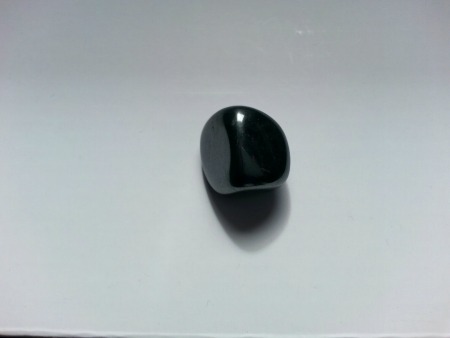
Polished Hematite chunk — maybe the perfect “worry stone”!
Look deep into nature, and then you will understand everything better. ~Albert Einstein
Not discovered until 1806, Sodalite really isn’t a gemstone at all. It’s typically a rich blue mineral stone named from the Greek for “salt stone” because of its sodium content.
Sodalite also appears in gray, purple, orange, or yellow — often with white veining from traces of calcite.
Thanks to crystaldictionary.com for this photo of tumbled Sodalite
Look deep into nature, and then you will understand everything better. ~Albert Einstein
Ancient Romans carved intaglio seals with it. The Chinese used it for making snuff boxes and an early form of sunglasses. The Swiss, Germans, and Austrians used crucifixes made from it to protect against bad luck and evil.
What is “it”?
Smoky Quartz.
Photo courtesy of Mid-Georgia Gem and Mineral Society