No NaNoWriMo for Me

So who’s planning on participating in NaNoWriMo this year?

For those who aren’t familiar with the term, NaNoWriMo stands for National Novel Writing Month. Begun on the West Coast in 1999 with all of 21 participants, it’s grown exponentially ever since; last year, more than 200,000 people signed up for the challenge.

Basically, participants commit to writing a new 50,000-word novel in the space of 30 days, beginning at midnight on Nov. 1 and ending at 11:59:59 on Nov. 30.

To complete the task on time, they must write 1,667 words each day.

Do NOT expect me to participate in such tomfoolery!

Writing is serious business.

Sure, I’d love to write an entire novel in 30 days. I’d love to be declared a “winner” just by completing the required goal. And I’d love to have the kind of time in which I could do nothing for a full month but write.

But I’m telling ya, it ain’t gonna happen.

NaNoWriMo seems to encourage quantity over quality, a philosophy I can’t buy into. Their slogan is “No Plot? No Problem!”, also the title of the book penned by the instigator of this challenge.

Now I’m one of those painstaking writers. Even when I was working in the daily newspaper biz, I wrote and re-wrote my stories, changing a word here, moving a paragraph there, editing, always editing, right up to deadline. My editors used to love my clean copy (the good sisters who taught me English would’ve been proud!).

No way can I rationalize blabbering just to meet a word goal.

And another thing. Writing is a solitary endeavor. My inner editor is persistent in demanding I keep butt in chair and hands on the keyboard.

I don’t need (or want) weekly pep-talks in my e-mail box, advice forums, and fancy kickoff parties to “help” me write. That kind of procrastination only gets in the way of the task at hand.

Nor do I think it’s a good idea for NaNoWriMo to encourage everybody and his brother to simply string words together and call themselves a winner. There’s enough junk on the market right now; we don’t need more. And agents are probably shuddering over the idea that any of this hastily written drivel will actually be *gasp* submitted.

Finally, I’ve always believed you shouldn’t set unrealistic goals for yourself. That just sets you up for failure, which isn’t good for your self-esteem.

Some days I’m quite productive; other days, not so much. But I’d rather write less that’s right than more that’s filler.

As Gandhi said, “It is the quality of our work which will please God and not the quantity.”

Any thoughts you’d like to share?
A Little Something for the Maid

The past month has necessitated my spending several nights in motels, and I’ve got to admit, I’m not the happiest camper when traveling.

I like to get away, mind you. What I don’t particularly like is that hotels just aren’t home.

For one thing, the rooms are cramped. Bed, TV, and desk are jammed into one tiny space. There’s one door and one window; the decor’ is sterile, usually still life paintings or landscapes.

Room temperature isn’t home either. The best hotels have screens on the windows, letting guests have fresh air. Or ceiling fans in each room. But those AC/heating units are clunky, noisy, and probably filled with mold.

Nor is the lighting homey, especially in the bathroom.

How can I be expected to put mascara on in the dark??

It doesn’t seem to matter where you stay — hotels don’t feel as clean as home.

But the maids try. And they should be rewarded.

When I worked in pharmaceutical sales, my managers always instructed us to leave a dollar per person tip for every night we stayed in a hotel. Along with a little note to thank the maids for their service.

The housekeeping staff has a hard job — try hoisting those huge mattresses to change sheets; try cleaning toilets or bathtubs for several hours.

And it can be dangerous. They don’t know when some goon will try to jump them or leave a biting dog uncrated while they’re trying to clean.

Obviously, maids are being paid. That’s their job. (And in this day and age, they’re fortunate to have jobs!)

But every little bit helps, and I’ve never had one turn down the extra cash.

What about you? Do you leave a tip for the housekeeping staff, or is this a new idea?

Good-bye Fall

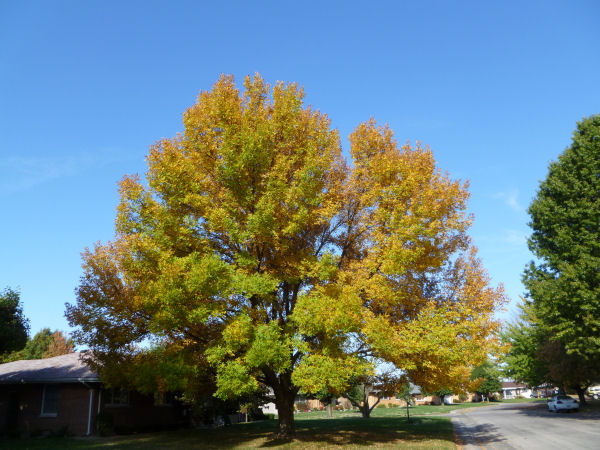
Fall is coming to a close in my area — or maybe it just feels like that.

Leaves have mostly turned; many have already dropped off. The days are shorter, the daylight surely is. Flowers are slipping into dormancy, my Sheltie’s winter coat is thickening, and there’s a crispness in the air. Homes are adorned with pumpkins and Halloween decor’.

As I write this, a steady rain is pattering upon our patio outside. The sky is gray and bleak.

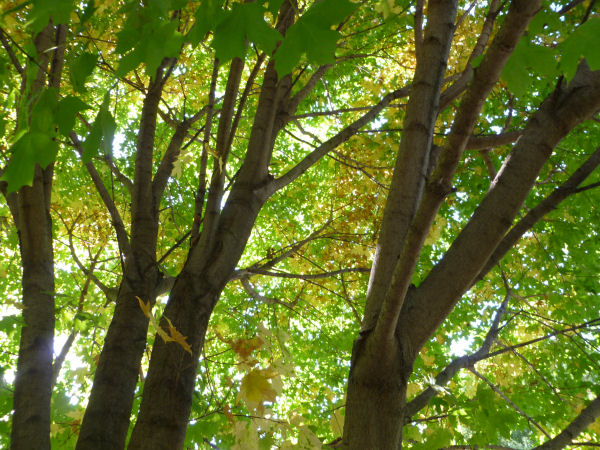
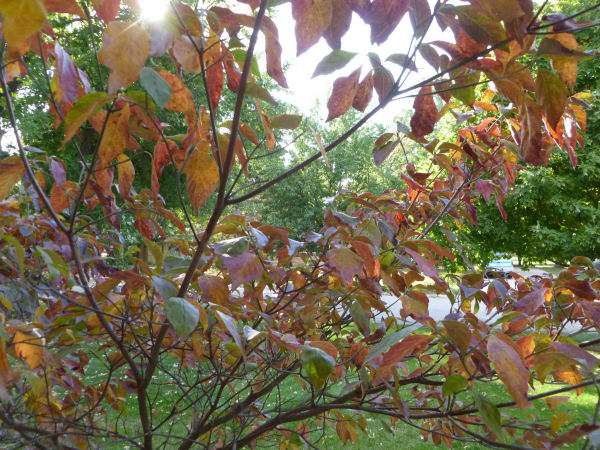
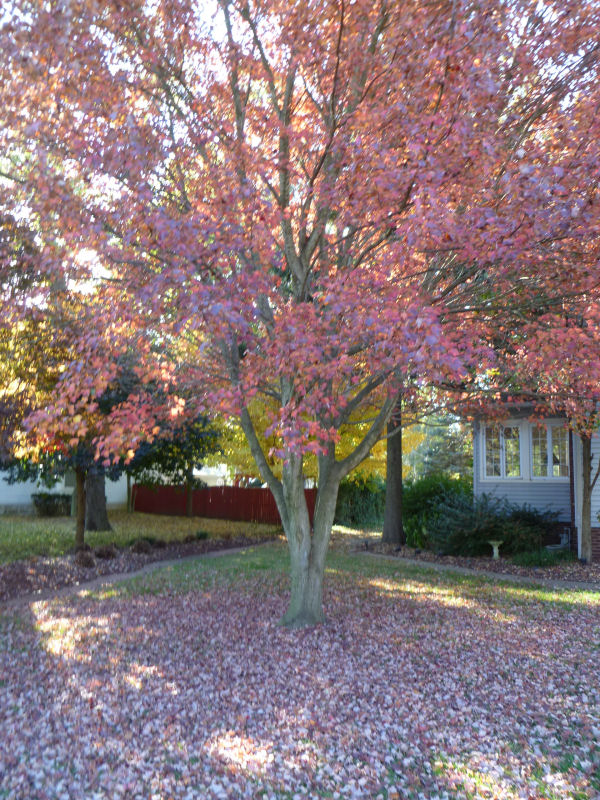
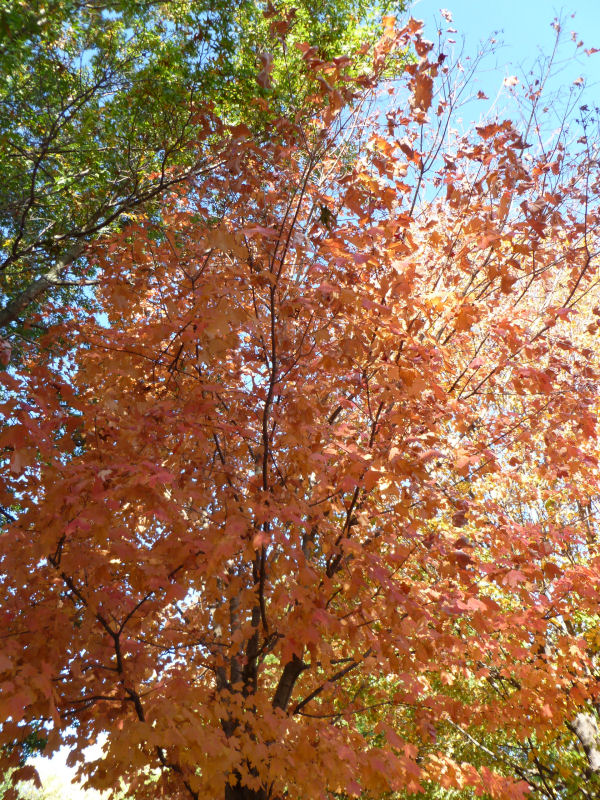
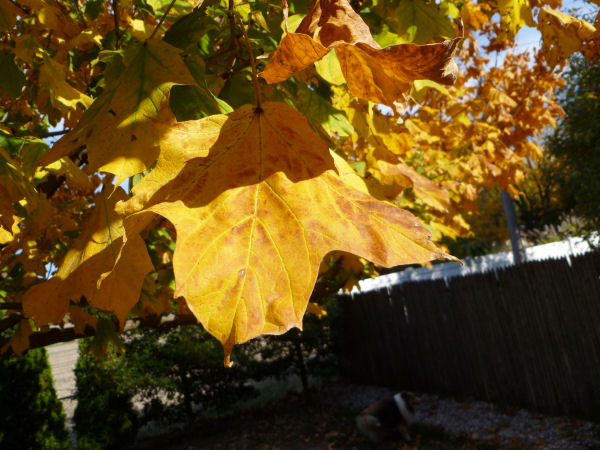
But sunlight and beauty linger in my camera from last week, so I decided to post the pictures before the snowballs start flying. Hope you enjoy them!

Sugar maple leaf turns golden

Sunlight streaming through trees

Dogwood tree turns coppery

Leaves on tree, leaves on ground

Tree turning red and gold

Tree turning gold from its top down

Weather forecasters are predicting another long, harsh winter for folks in my area. I think it has something to do with La Nina. Whatever, I’m not looking forward to ice. Cold I can take; snow, too, in dribs and drabs. But ice? Not my favorite.

How about you? What part of winter do you dislike most of all?

Change is on the Horizon

The Roman Missal, which contains the prayers used in the celebration of our Catholic Mass, is being revised (again!), with the new translations taking effect in the U.S. on Nov. 27, the First Sunday of Advent.

Now I imagine plenty of folks are already grumbling about having to learn new responses. We gave it a test run this weekend at church, and I heard lots of people trying to wing it with the “old” responses (this, despite having a handy cheat card in every pew!).

The text we’ve been using has been in effect since the 1970s and frankly, many of us have become somewhat complacent with the current verbiage. Because it’s so familiar to us, we recite it automatically with little thought to what we’re saying.

I can’t imagine God wants us to approach our sacred Liturgy that way!

So the Church in her wisdom has some new words for us, words that more closely follow the original Latin, words that parallel the other major language groups who never got away from the Latin.

The first major change will be the people’s response to the priest’s greeting, “The Lord be with you.”

What we have been saying is, “And also with you.” This will be changing to “And with your spirit.”

See, it’s not a big change, but it’s one we laity will find tough at first (due, perhaps, to how often the greeting is exchanged). But it’s designed to follow Sacred Scripture as well as to acknowledge the work of the Holy Spirit in the Church.

Most of the other major parts of the Mass, including the Penitential Act, Gloria, Creed, Mystery of Faith, and even Sanctus are undergoing change. Not big changes, mind you, but different wording here and there.

And it’s not just the people’s part that will change; priests, too, will have new words to learn. So we’ll probably see our priests, who now say Mass by heart, scrambling to read the changes until they, too, learn them!

Change is something most of us dread. It yanks us out of our comfort zone and puts us on shaky ground.

But all change isn’t bad. As one who studied four years of Latin, I’m eager for these changes. I hope the unfamiliar words will force us to wake up, pay attention, and appreciate the beauty of our Liturgy, and then to grow more fully in our faith.

SD Cards Don’t Need Baths

We all tend to think of “tech-y” people as infallible when it comes to gizmos, but even though I’m in a tech business, I’ve made my share of gaffes.

Take the other day, for example.

My blogging friend Katybeth asked me if I had any interesting photos of fall foliage that I could send her. Her trees don’t turn color as early as ours do because she’s farther north, yet she wanted to include an autumn-like picture on her blog.

It was gorgeous outside, so I decided to take a quick stroll around the neighborhood and see what I could find — and yes, you can interpret that to mean I was procrastinating! It was Sunday, after all, and who can work when fall beckons?

So I picked up my camera and off I went; however, as soon as I turned my trusty digital on, I realized something was amiss. The following message popped up:

‘Pictures will be recorded to built-in memory.’

Hmm, obviously I didn’t have my SD card installed. I checked and sure enough, the slot was empty.

Okay, where’s the card?

I tried the usual places before recalling that I’d taken it to Wal-Mart recently to print off some pictures for my son’s memory book. That meant the SD card was still in my jeans pocket for I know that’s where I put it when I finished at the kiosk.

But wait — didn’t I wash those jeans?

Racing upstairs, I dug in the pocket of the first pair my hands could reach. There was the SD card. It looked okay and didn’t feel wet. But still. . . .

With a hope and a prayer, I slipped it into my computer.

Miracle of miracles, all of my photos and videos were intact. Displayable. Just as I’d left them.

Wow!

I can’t figure out how they managed to remain unscathed. I mean, those jeans were washed, line dried, and ironed, for Pete’s sake.

But I’m not complaining. That SD card contained images from a segment of time I can’t capture again.

Pictures are memories, and memories are priceless.

So learn from my mistake and don’t wash your storage media!

Have you ever done anything this stupid? How did it turn out?

All Dressed up and Nowhere to go

I kind of miss getting all slicked up and going into an office to work.

No, I’m not retired — I work for myself. Out of my home.

And while there are a gazillion-and-one positives, the slicking-up thing is one I miss.

Sometimes.

In my early career as a newspaper journalist, casual pants and a blouse (or sweater, depending on the weather) were my “go-to” uniform. My makeup was subdued; my hair wash-and-wear. That’s it. I had to be ready for whatever the day would bring, whether it was covering a fire or a meeting or interviewing some official.

Male reporters wore slacks, a dress shirt, and tie (no jacket, unless you were an editor). Some donned jeans; the sports department got away with shorts (or sweats) and T-shirts with team logos.

The female reporters dressed pretty much as I did. Any time one of us appeared for work in a skirt or dress, the others in the newsroom never missed the opportunity to rib us and ask where we were heading that day to require getting “all gussied up.”

After I changed careers and became a pharmaceutical sales rep, I had to purchase a completely new wardrobe. Suddenly I needed suits with matching skirts or slacks, hosiery, heels, a briefcase. My makeup had to be perfect; my hair properly styled; my fingernails manicured with polish. Every day.

When you’re sitting face to face with doctors or pharmacists, promoting your product in big-city convention halls, or working with your manager, you want to look your best. Your company expects it; everybody else looks like a cookie-cutter version of you.

But now I’m a self-employed Web designer. I work from a home office; I wear what I choose.

Outside-the-office meetings with clients or potential clients find me dressing up a bit, but most summer days I’m in shorts, T-shirt, and sneakers; my jeans come out when the weather cools. Who really cares what someone is wearing when they’re working on a computer all day? But I haven’t shaken the habit of putting on makeup, keeping my hair styled and my fingernails polished!

The point is, Now it’s my choice.

Still, every so often, when I’m walking my dog early in the morning and I see cars pass with slicked-up people going to work, I find myself longing to be slicked up, too.

Well, maybe just a teeny bit.

Do I miss it enough to give up self-employment?

Uh-uh. No way.

Letters Go the Way of Steam Locomotives

I read this morning that the average American home last year received a personal letter about every seven weeks.

That compares to 1987, when personal letters (not counting greeting cards or invitations) arrived once every two weeks.

As a writer, I think that’s sad.

The annual survey done by the postal service points to the proliferation of electronic communication — Facebook, e-mails, Twitter, etc. — as the reason for the drop in letter-writing. Catalogs, requests-for-monetary-contributions, and advertisements aren’t figured in with this statistic.

Admittedly, I’m as guilty as the next person for sending my share of e-mail. I write My Favorite Domer almost every day, whether it’s just a quick reminder or something funny I forgot to tell him on the phone or an “I love you” or a “Good Luck on your test.”

But it’s different with my childhood best friend. She moved away when we were in junior high, and we’ve corresponded by letter ever since. What once were pages upon pages of handwriting on pretty stationery now are typically plain white papers keyed in on computer and printed out for mailing. Sure, we could call and chat or e-mail, but we don’t. We prefer to write real letters. I love seeing her familiar handwriting on an envelope in the mail, grabbing a cup of tea, and curling up to read.

A letter, I think, is so much more personal than, say Facebook. With a letter, I can be me, whereas online, I find myself more guarded in what I say and how I say it.

Another sad aspect of the decline in personal letter-writing is the shortage of “love letters.” Do you remember being separated from your beloved — even for a short time like Christmas or summer vacation — and hand writing long, intimate letters? I do. My parents’ generation did, too, during the war years, and many a home has a stack of love letters tied with pretty ribbon and stashed in the attic.

I suspect the postal service would love for personal letters to make a comeback and ease their financial woes. I’m afraid I don’t see that happening any time soon. Few of us want to give up the immediacy of electronic communication.

What about you? Do you still send or receive personal letters?

Mom and the Cleaning Lady

Mom had to fire her cleaning lady two days ago.

To understand how traumatic this was for her, you have to know Mom didn’t work outside of the house when we kids were young. Once we were off to school and adulthood, she still didn’t. She let Daddy handle the “unpleasant” situations — dealing with workers, balancing the checkbook, etc.

I guess it was typical for the times in which they lived.

But it wasn’t practical.

After she and Daddy got up in age, I often cautioned them not to rely on a stereotypical division of chores. If something happens to one of you, I said, the other is going to be left helpless and dependent.

They didn’t listen.

So Mom, with zero hiring and firing experience, employed a lady to clean house. “A” was supposed to arrive by 8:00 o’clock and leave by 11:00, every other Friday. During her interview, “A” told Mom how much she’d charge, and Mom agreed.

The first few times “A” came, she did a fabulous job. She was thorough and fast, didn’t spend a lot of time chit-chatting or drinking coffee, and arrived and left on time.

Mom was thrilled.

But over time, “A” started to slack off. She’d get to Mom’s at 8:30, run a rag over the counters, wipe out sinks and bathtubs, mop the floor and vacuum the rugs. There were entire rooms she never even touched!

And then she’d present her bill and leave by 10:00 a.m.

Did she reduce the amount charged because she was working fewer hours? Nope.

Did Mom feel incensed at paying the same amount and getting less stuff cleaned? You bet.

Now Mom earlier talked to a bunch of women who clued her in to how much cleaning ladies typically charge. She knew “A” was charging quite a bit more; however, she was willing to pay, considering all “A” was doing.

No more.

Mom called “A” and told her she was letting her go. She hemmed and hawed about the reasons, but what she should have told “A” was this:

Clean means different things to different people. What “A” considers clean is something Mom calls “a lick and a promise.” What Mom considers clean is way more than “A” ever bargained for. Mom wants the house to not only look clean and smell clean; she wants it to sparkle and be sanitized, too.

Merely wiping out a bathroom sink doesn’t cut it.

I hope Mom learned a lesson. Next time, maybe she’ll spell out exactly what she expects of a cleaning lady before finding herself having to fire another one.

Anybody have any tips I can pass along to help Mom in her next hiring and firing situation?

School Leaf Collection Projects

When did teachers stop requiring students to make leaf collections in science class?

I remember making one in junior high; so did my sister. But none of our kids did.

Could it be that today’s teachers think all kids have to do is Google stuff if they’re interested in leaves and trees?

When I was that age, we didn’t have Google, and teachers recognized the connection between physically doing something and learning.

So we had to scour the countryside for actual leaves and fruit; take detailed notes on the shape of the tree, the appearance of its bark, and its location; preserve the leaves between pieces of wax paper inserted into big thick books; and organize the whole thing into some sort of folder.

For a grade.

We quickly learned:

  • where in town the interesting trees could be found
  • to be careful with those leaves, gathering intact specimens rather than bug-bitten ones
  • and to work quickly, before frost fell

I can still hear my dad cautioning me, “Don’t wait ’til the last minute, Deb. Some trees lose their leaves in winter.”

A certain protocol came about with school leaf collection projects and for a shy kid like me, it was uncomfortable.

You had to find the tree, then knock on the owner’s door and ask if you could have a leaf for your collection.

Not borrow it — you weren’t bringing it back!

Most folks didn’t seem to mind. Some told me to help myself to the lot of ’em. They were going to fall off anyway, and this would mean one less for them to rake up and burn.

It was a happy day when no one answered the knock on the door. Only then could I grab the prize leaf and RUN!

Thanks to my forward-thinking, yet practical, teachers, I did learn about leaves and trees. To this day, I can identify many trees by their shape, bark, and leaves.

My Favorite Domer finds this fascinating though a bit odd. He never had to make a leaf collection so one tree looks pretty much like another to him.

Sad.

So who else out there has memories of leaf collections in school?

That Helpless Feeling

My Favorite Domer (AKA College Guy) called the other night to tell me he’s been sick with some kind of upper respiratory bug.

The kind that makes your nose run. And your eyes water. And your throat tickle.

The kind that makes you want to crawl into bed and sleep, not pore over textbooks, take notes, and study for tests.

This might be one of the hardest things to endure as a parent — a kid who’s sick and miles away from home.

No, it’s not a major catastrophe (thank heaven!).

Yes, many of his friends are also sick. The changing weather — hot and windy one day, cold and rainy the next — certainly plays a part. And it doesn’t help that he’s had too many nights without sufficient sleep of late.

I know these “bugs” have to run their course, generally a week to 10 days.

But the mom in me wants to feed him chicken noodle soup and Jello. Why? Because my mom fed that to me, and it seemed to help.

I want to strip the sheets off his bed and put on fresh ones. To tuck him in with some Vicks VapoRub and a humidifior belching warm steam.

I want to draw the blinds and close his door, letting him sleep until he feels better.

I want to set aside his homework and books and projects. Just for a little while.

Just until his brain isn’t so foggy and he’s able to concentrate again.

But I can’t. I’m too far away, and he’s too grown up for mom to hit the highway and hover over him.

So I fight that helpless feeling, knowing there’s an Infirmary on campus if he starts feeling really awful.

And I pray for healing. And I count the days until he’s well and back to being himself.

What tricks have you found that make sick kids feel better?