Attracting Hummers

Not so long ago, I was visiting at a friend’s house, and her backyard was abuzz.

Hummer after hummer flew toward her feeder, sucking greedily from the slots, then spinning off. They chased one another, hovered suspended in the air, chirped, and put on a fascinating show.

I was hooked. I had to have a feeder of my own.

So the next time I was in WalMart, I browsed through the garden and outdoors section, finally deciding on a hummingbird feeder.

With nectar to go inside.
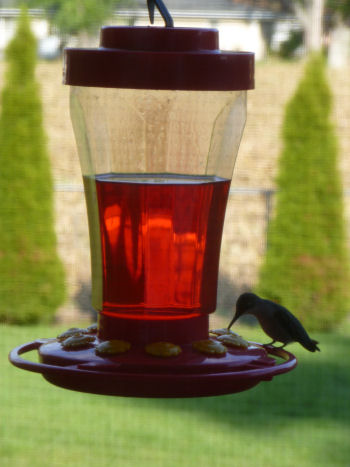
The nectar was red when I bought it, though the hummers don’t seem to care one way or another!

I took my prize home, followed the directions for making the “food,” and hung the feeder right outside the kitchen window.

Where, I hoped, every time I washed my hands at the sink, I’d be able to watch the tiny creatures.

I waited. And prayed for the arrival of some hungry “guests.”

At last, I was rewarded! Hummers have found my feeder, and they’re coming often to eat.

I’ve since learned that these tiny birds (about 3.5 inches in length), flap their wings approximately 80 times per second (thus, the humming sound!). Unlike some other birds, they don’t mate for life; the mama birds handle all the nest-building and baby-raising. The nest is about the size of a ping-pong ball; the eggs, the size of a jelly bean.

Hummers migrate annually, spending winter in the warm southern climates. Prior to their trip, they must “fatten up,” nearly doubling their body weight. People can help by setting out feeders (1/4 c. sugar, 1 c. water, NO red food coloring!); if temperatures are predicted to dip in the evening, bring the feeder in so the birds don’t have to drink cold food.

For more hummingbird facts, check this out.
Some Like it Hot

Those who forecast the weather are gloating over a recent break in our Midwestern heat (like they had something to do with it!)

Temps that were hanging in the high 90s and low 100s have dropped — finally! — to a more reasonable low 90s.

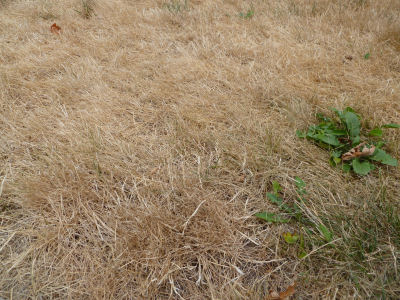
So far, so good. What they fail to mention is how dry it is.

I’m not a farmer, and I can’t find any data to corroborate this, but I’m calling it a drought. If it looks like a duck and walks like a duck and quacks like a duck, it probably is a duck!

While parts of Illinois benefited from the passage of a cold front (and its accompanying storms), we did not. No rain for weeks on end.

Oddly enough, our plants seem to recognize the difference between Mother Nature’s drenching and the stream from a garden hose.

Since a picture is better than my rambling and complaining about it, take a look and see for yourself:

Wonder if our Kentucky Bluegrass will turn green again?

Big ole cracks where grass is supposed to be

This redbud, I’m afraid, has seen its last days

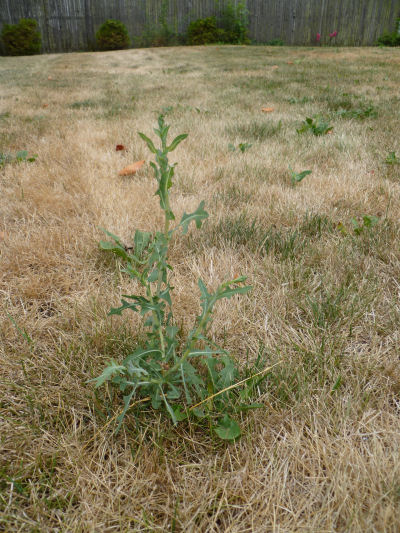
Weeds seem to love this dry heat!

Now, lest you think all is lost, let me contrast this dire picture with some that show what happens when plants do get water (even if it’s from a hose!):

Aren’t these beautiful and happy-looking?

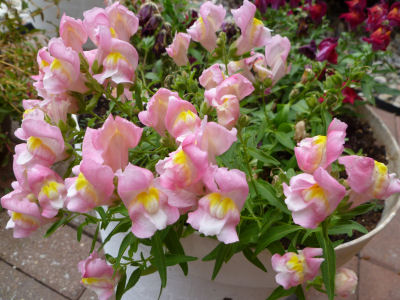
Snapdragons in full bloom love the sun

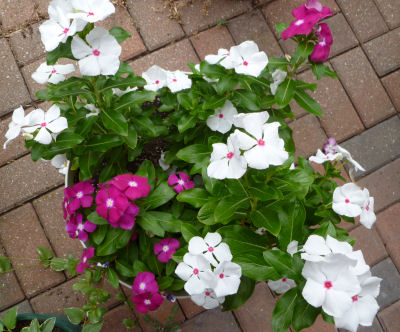
Vinca, another sun-loving flower

My crepe myrtle — yes, it should be pruned, but that’s a chore for late winter. Isn’t it magnificent, though?

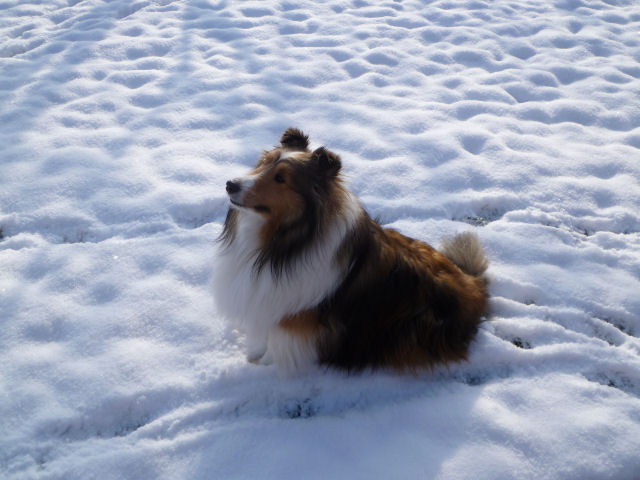
Walking with the Sheltie on an early June day

My friend Bella over at One Sister’s Rant recently posted about the beauty in her neck of the woods and suggested her fellow readers share photos of their world as well.

(I know, I know. This is the second time in a row that I’ve written posts based on others’ suggestions. I assure you, I really do have ideas brimming in my head, but sometimes a lady’s just got to roll with the punches! Besides, both of these ideas are too good to pass up, so here goes:)

Don’t you love this rustic gate?

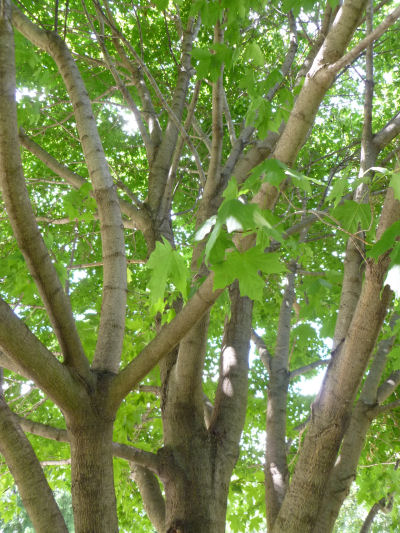
Nothing like being under a maple tree, looking up through its branches on a sunny afternoon!

This little squirrel tight-roped his way to safety, pausing midway along the line to watch me and the Sheltie below him. I live in fear of what the Sheltie would do, should one ever drop off the line!

This poor robin didn’t make it. I couldn’t tell whether a cat got it or what. At any rate, the Sheltie strained at his leash to investigate, but no way do I want my boy sniffing dead stuff!

Around here, they say corn should be “knee-high by the Fourth of July.” Obviously, this is going to be a good season, for these corn plants are easily thigh-high and it’s still early June!

Do you love wind chimes as much as I do? There’s something mystical and quite relaxing about the sound they make when a gentle breeze blows through them.

An open red rose just begs for you to smell it!

Let’s wrap up our journey with a nice visit on this lovely bench. Can’t you see us sitting here, coffee (or tea) mugs in hand, chatting about everything? Or nothing?

Thinking about Mother’s Day

My Favorite Domer called me yesterday to wish me a happy Mother’s Day.

“No card. No flowers,” he said. “I just wanted to call and tell you ‘I love you.'”

I had to laugh — it’s easier than crying!

Despite my persistent efforts, Domer has never been a card and flowers kind of guy. Perhaps it’s because he grew up away from his dad, who always did the card and flowers thing when it came to special occasions (thank you, Ex!). Perhaps it’s because Domer never saw his Pa-Pa buy cards and flowers for his grandma.

But I’m convinced it’s because of a new teacher he had when he was an impressionable high school freshman.

One day toward Valentine’s Day, some of the girls in Domer’s class were asking Mr. Young-Attractive-Hot-Shot what kind of flowers he’d purchased for his sweetie. Whereupon, Mr. Young-Attractive-Hot-Shot said he wasn’t giving them, then expounded on his philosophy that flowers were a waste of money. That as soon as you cut flowers, they start to die. That he wouldn’t want anybody special to have to receive dead flowers.

Huh??

I sincerely hope Mr. Young-Attractive-Hot-Shot had an understanding lady friend. Or has since changed his evil ways!

When Domer was little, as soon as he could print his name, I bought cards and had him give them to special people on special occasions. I never failed to give him cards on special occasions, either.

Yes, Hallmark loves me — I must be their biggest fan!

But somehow, Domer never got into cards. He told me yesterday that he can’t imagine being an old person and remembering the verse on a card somebody gave him years ago.

I countered that I might not remember the verse when I’m old, but I’ve saved ALL of my cards in boxes so I can wade through them at leisure. “That way, I can remember that once I was a young mom and I was loved,” I added.

“You’re loved now,” was all he said.

And it’s all that needed to be said.

How did you celebrate Mother’s Day 2012?

Bunny Tales (or should I say, Tails?)

I hate to say this, but when God was handing out brains, rabbits were in another line.

Oh, they’re cute, all right. And they can hop and run fast. And I’ve never heard of one attacking anything (except, perhaps a veggie garden!)

But why are mama rabbits so dumb?

I mean, we have a large, fenced backyard, perfect for the Sheltie to run. We have trees and bushes, where the Sheltie can lounge or play hide-and-seek.

It’s not a yard where anybody would be dumb enough to drop their litter of babies, then run off and ignore them for hours on end.

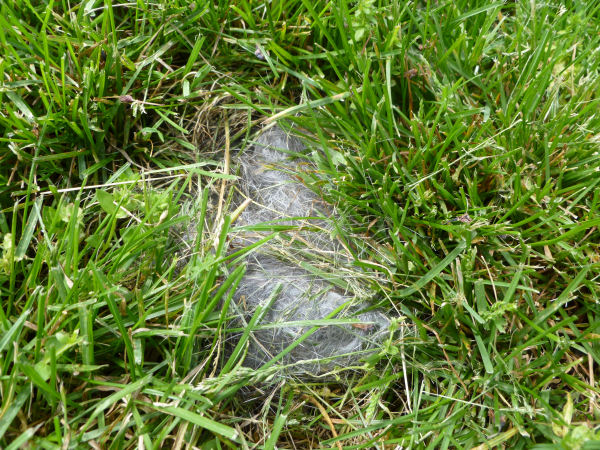
Backyard bunny nest

But leave it to an as-yet-unseen Mama Bunny — that’s just what she did.

The other day, I watched from a window while the Sheltie went out to potty. He doesn’t get a cookie reward unless he accomplishes something, and I’ve known him to fib!

Well, he kept nosing around this one spot, circling it, examining it, curiosity written all over his furry face.

He’d found something.

Having just proofed an article on rabies in wildlife that a friend had penned for the local newspaper, I feared the worst.

A dead animal. With rabies.

So I braved the outdoors to check. What I saw was a patch of rabbit’s fur on the ground, and the fur was moving!

Mama Bunny had thrown caution to the wind and dropped her babies right in my backyard. Right where the Sheltie could get at them, if he was so inclined.

Now every time he goes out, I’m having to remind him to keep away from that bunny hole. So far, he seems to understand.

But he’s mighty curious. And every time the door opens, he high-tails it outside, right to THE SPOT.

Where he watches. And listens. And sniffs.

I can only hold him off so long. When those babies pop out of that hole, he’s going to have a field day herding them around the yard!

If the neighbor’s cats don’t get them first.

Easter Egg Hunting

Sad to say, My Favorite Domer learned from an early age that Easter Egg hunts aren’t as much fun as they’re cracked up to be.

When he was but a young’un, Domer signed up to participate in the annual YMCA egg hunt.

There would be prizes. And candy. And a visit from the Easter Bunny. And fun.

Or so we thought.

The day of the hunt dawned cold (typical Midwest weather). We arrived at the park, registered, and were shown which fenced-off area the kids in his age group would comb.

So far, so good.

When the whistle blew, the kids were off. Problem was, so were the parents.

Yep, the adults got involved in a kids’ Easter Egg hunt. They mowed down the fence and muscled their way toward the hidden eggs, knocking down little kids right and left.

Kids were crying and screaming; other parents were hollering.

Nobody had much fun.

Especially Domer, who, like his mom, doesn’t particularly like crowds.

Or aggression.

Our Easter Egg hunts then became more tandem affairs. I’d hide the eggs; he’d find them. When he got older, he’d hide the eggs and let me look for them (but mostly, he just couldn’t stand not telling me where each one was!)

Fast-forward a few years. Domer was fifteen when a darling Sheltie came to live with us.

Too old for egg hunts.

So we decided to hold an egg hunt for the dog.

We took some treats (broken bits of Pupperoni work especially well!) and inserted them into plastic eggs. One of us went outside with the dog while the other hid the eggs in plain sight inside.

With the hiding completed, we let the Sheltie inside to search.

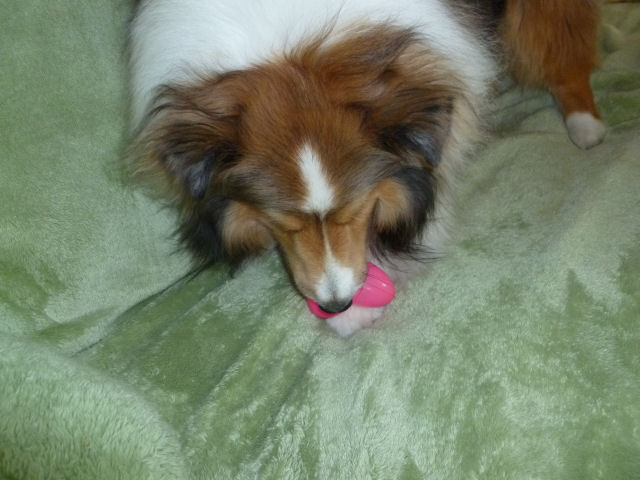
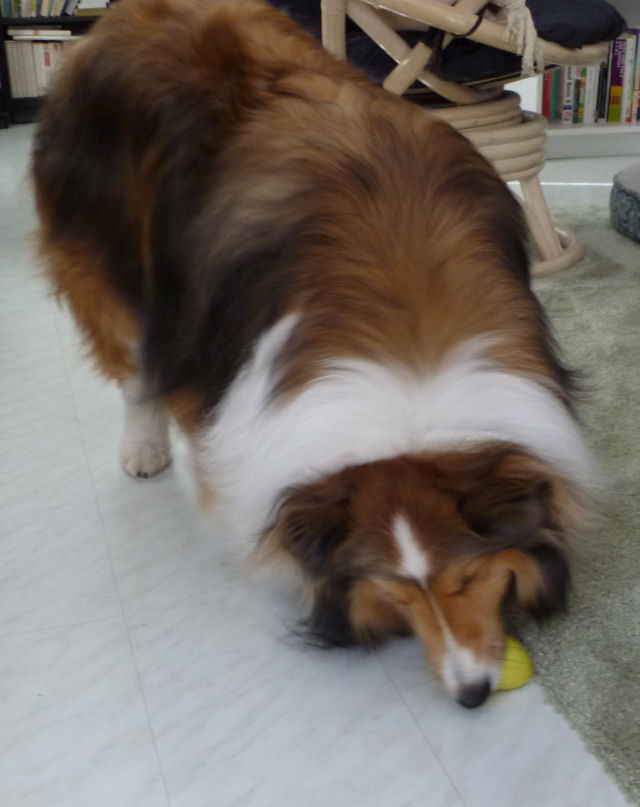
He LOVED it! Amid much clapping and laughing and encouragement from us, he raced around the house looking for the eggs with the treats. Finding one, he’d bust it open and scarf down the tidbit.

So that’s become our Easter tradition — a dog’s egg hunt.

No pushing, no shoving, no screaming. Everybody has fun, and isn’t that what Easter Egg hunts are supposed to be like? Here, take a look at a few of this year’s hunting photos:

Finding a pink egg

Finding a yellow egg

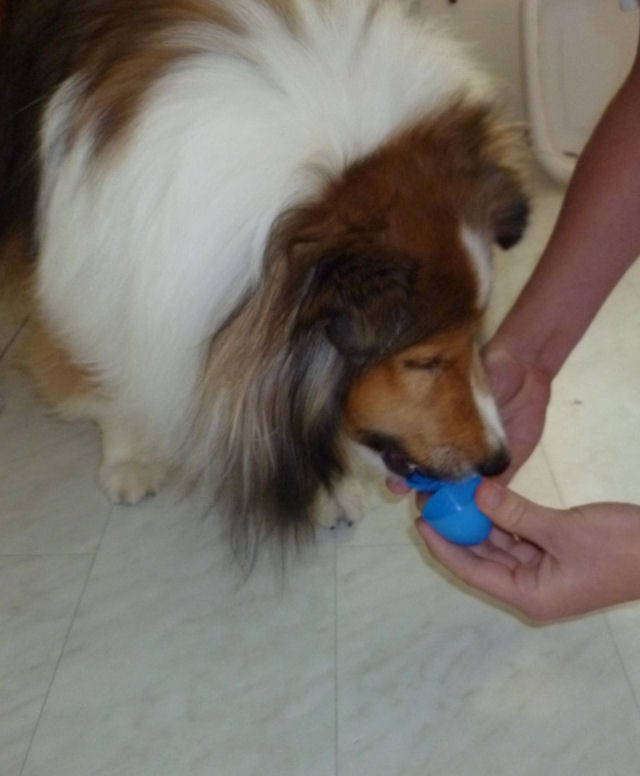
Domer helps with the blue egg

Happy Easter!

I’ve got a case of the lazies right now (let’s just call it Spring Fever!). It’s hard to be inside working when the sunshine is calling, birds are chirping, and nature beckons.

Anyway, with Domer home for a short spell and all the church obligations I need to participate in over the weekend, I decided I’d take the easy way out and post some spring pictures. You enjoy pretty pictures now and then, don’t you?

Here’s hoping everyone has a beautiful Easter!

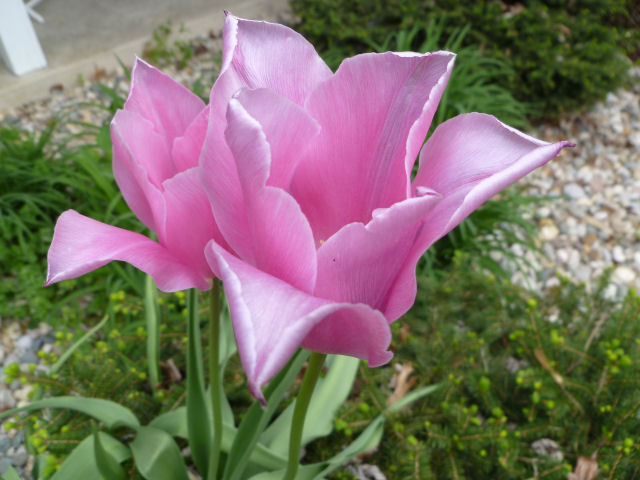
Pair of pink tulips

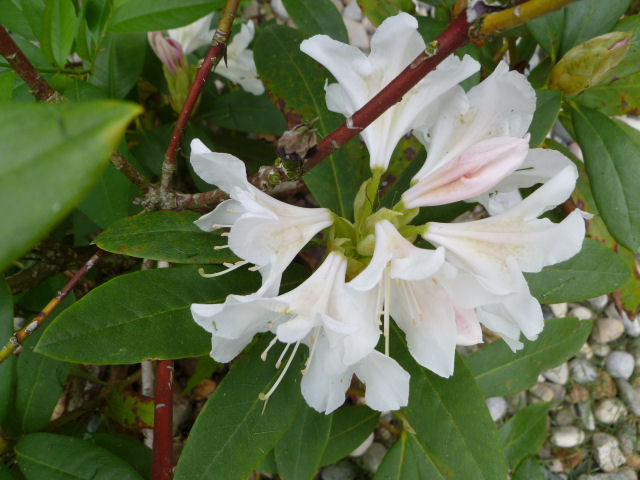
I think this is a rhododendron

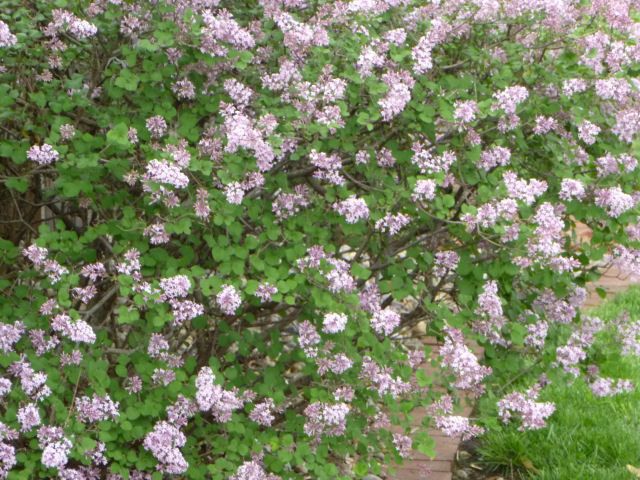
No clue what this is, but it's a mass of lilac-colored blooms!

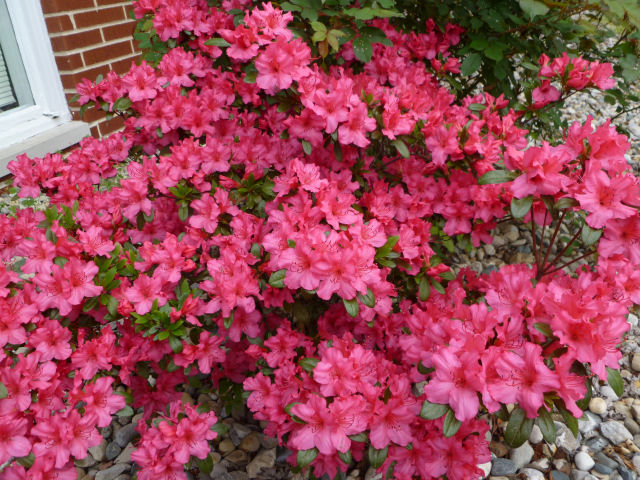
Pink azalea

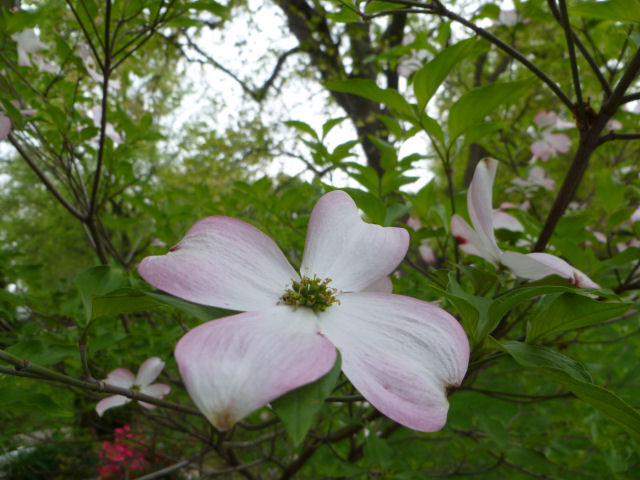
Dogwood blossoms

Palm-Weaving

Yesterday was Palm Sunday, the day commemorating Jesus’ triumphal entrance into Jerusalem. The people welcomed Him by laying palm branches (a symbol of victory) along the street and singing songs of joy.

Less than a week later, He would be crucified.

Christians the world over continue to celebrate Palm Sunday, with church-goers receiving blessed palms.

But what can you do with a palm leaf once Palm Sunday is over? I mean, you can’t just throw it away because it’s a “sacramental” and reminds us of Christ’s resurrection. It also points to the multitude of saints in Heaven “wearing white robes and holding palm branches in their hands.” (Rev. 7:9)

Traditionally, some people return home with their palms and place them behind a crucifix or a religious picture. I’m told that farmers often bury them in the corners of their fields. Many parishes re-collect the dried palms before Ash Wednesday and burn them, using the ashes for that liturgy.

Another custom, particularly among Italian and Polish peoples, involves palm-weaving.

To weave palms, you take the frond (leaf) and transform it into a new shape by bending, cutting, and folding. Some of the more popular shapes include crosses, crowns of thorns, roses, and various animals, including fish.

Perhaps because the Palm Sunday readings are longer than those on other Sundays, I usually find myself weaving a cross out of my palm. I assumed some of my Italian forebears did likewise, but when I asked Mom which of her relatives passed this custom down, she didn’t remember any of them doing that.

As I thought about it longer, I realized the first time I made a palm cross was when Domer was little. An older woman sitting nearby was calmly folding and bending her palm frond into a beautiful shape, and Domer was fascinated.

Quiet, too, which is saying something for a small child in a long church service!

Anyway, Domer watched this weaving and promptly mimicked it with his own palm leaf. He silently walked me through the process, which, by the way, is easier than it looks online.

We still weave our palm fronds into crosses, but some of those other patterns look interesting. Do you weave palms, too?

Topsy-Turvy Weather

I doubt any section of the United States is more concerned about weather than the Midwest.

Perhaps it’s because we’re so heavily agriculture-based. Perhaps it’s because for so much of the year, our weather is lousy.

Whatever.

We talk about the weather. We pray for good weather. Our radio stations and newspapers carry extensive weather reports. We have weather apps on our phones, and our computers bring up The Weather Channel as a home page. Weather radios are a big seller for stores; so are snow blowers and houses with basements.

Normally, mid-March brings awful weather. Cold, winds, grey skies. A sudden snowfall. An unexpected ice event. More shoveling, more concern over when the farmers can get into the fields and plant, more despair over Spring’s tardiness.

Not this year.

This year, our weather (as my friend Monica so aptly pointed out) has been gorgeous.

Sunny. Warm, to the point of almost-hot. Gentle breezes. Downright Spring-like.

College kids home on Break didn’t need to plan a trip to Florida this year. They could golf, catch some sun, run, and play tennis, right here at home!

Indeed, who wants to stay inside watching March Madness on TV when you can be outside?

Within just a few days, our weather went from this:

Gotta love this snow, Mom!


To this:

Daffodils in bloom


Too weird.

Usually, we’re bundled to our chins in coats, hats, mittens. Boots and jeans are the uniform of the day.

Now we’re shedding clothes like my Sheltie sheds his coat. We’re busting out shorts and flip-flops, T-shirts and tanning oil.

Some love it; some hate it. But in the Midwest we have a saying, ‘If you don’t like the weather, just stick around a few days because it will certainly change.’

How true that is!

I don’t expect this balmy spell to last. It probably won’t, if truth be told and history any indication. As the experts note, March came ‘in like a lamb,’ so it’s bound to go out roaring ‘like a lion.’

But, oh, while it’s here, we’re enjoying every minute of it!

Happy St. Paddy’s Day!

May there always be work for your hands to do.

May your purse always hold a coin or two.

May the sun always shine warm on your windowpane.

May a rainbow be certain to follow each rain.

May the hand of a friend always be near you.

And may God fill your heart with gladness to cheer you.

— Irish blessing

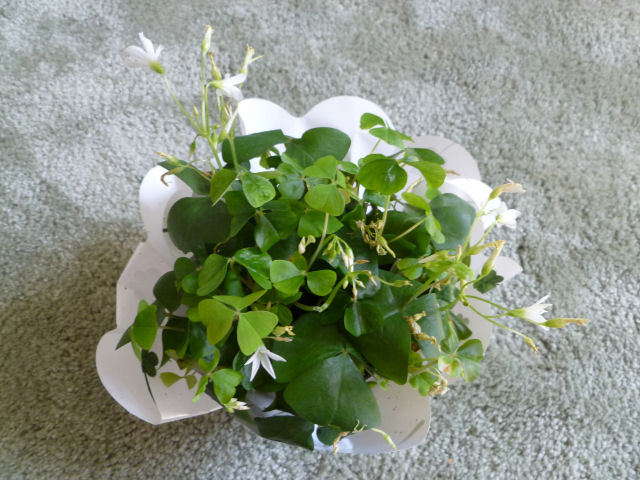
ImageHappy St. Patrick’s Day from me and Fiona.

Who’s Fiona? My Shamrock plant, that’s who.

Of course you knew I’d have a Shamrock plant, didn’t you? Don’t all Irish folks have Shamrocks hanging around?

Actually, Fiona’s real name is Oxalis, and she’s a member of the wood sorrel family. Her brothers and sisters come in shades of green, purple, and red; they bloom with tiny white, pink, yellow, or red flowers once or twice a year.

Widely available around St. Patrick’s Day, Oxalis is easy to grow from carrot-shaped roots. A perennial, Oxalis likes a woodsy, shady area with rich, moist soil. It goes dormant during the summer; cut the leaves back and put it in a cool, dark place for two to three months. When you notice fresh shoots emerging, move it to a sunny window and start the cycle anew.

One warning: Shamrock plants are toxic to dogs! Ingesting quantities of any part of the plant can cause a dog to vomit and lead to kidney failure and death. My Sheltie doesn’t even know that Fiona exists because she’s on a really tall shelf, far away from his curiosity!